I was amazed as a kid playing the video game Crash Bandicoot on Sony’s Playstation-1, how can that little box show all of those cool worlds and characters that I could interact with, it felt like magic.
25 Years later, I now know how that little box did what it did, and it still feels like magic.
Digital technology has changed how humans live their lives, it is an incredible, strange time to be in especially given that (based on what we know) for thousands of years humans did not possess this superpower-like technology, and had lifestyles of either hunting, raising cattle, farming and trading.
The ability to call anyone in the world and see them in real-time through a glass screen, interact with AI chatbots with more general knowledge than any other human and deep specialized knowledge in many fields, access a huge network of shared content and information that is essentially a collection of human knowledge … the list of incredible technologies goes on and on.
However, with time and cumulative scientific advancements and increasing investment in R&D, digital technology became incredibly useful, and in certain cases, quite harmful
The New Loneliness
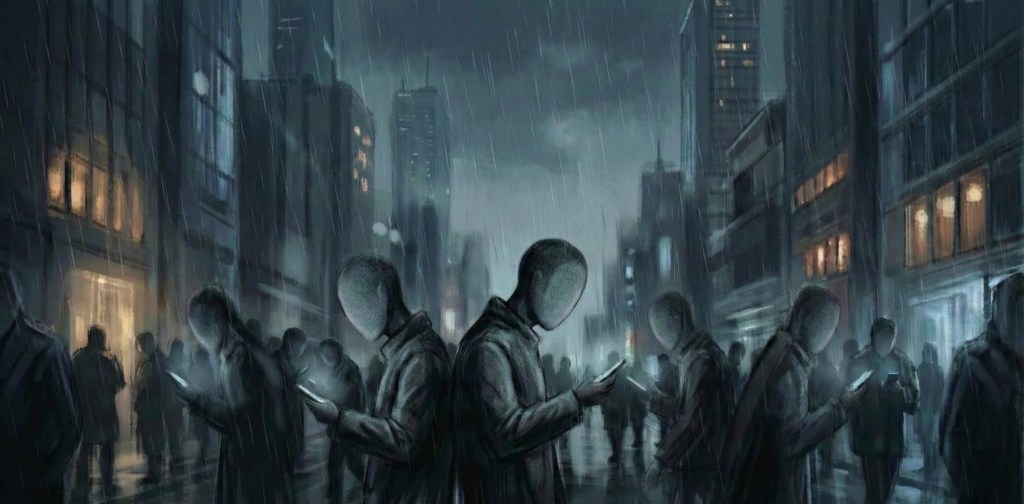
The “glass screen” that lets us see someone across the ocean has, ironically, made it harder to see the person sitting across the dinner table. We are the most connected generation in history, yet we’re arguably the loneliest. Our social lives are overwhelmed with “digital social lives” through social media apps, interacting with pixels on a screen, We are losing the real feeling of a human touch or just sitting together in silence.
Humans may not be built for socializing exclusively through digital mediums, you can see the proof of that by taking a quick scroll in any social media app and witness some of the thousands of online battles happening everyday,
Bullying, racial slurs and simply mean comments hurling in every direction, I would strongly argue that if these online warriors were talking together in a room they would not be that mean to each other, but this “inorganic” communication through a screen lacks a human connection.
The issue is that big tech is spending billions to design their apps to make user spend more and more time using them, essentially working hard to hack humans brains to use their apps.
The Attention Economy
The more time you spend using a social media app means more time seeing ads, which makes the app more attractive for advertisers, the more time you spend using any digital product is a net positive for the company that made that product, so for the majority of technology companies in the world with trillions of combined capital:
Your time using their product = Their revenue
Capitalism has been a driver of innovation , but now it drives technology companies to basically hack our brains into using them, lately as TikTok introduced a new way to consume content with attention-grabbing design patterns (Instantly playing videos, endless feed, revolutionary algorithm that adapts to user interest) other social media companies had to fight for your attention: YouTube introduced Shorts, Snapchat introduced Spotlight, Instagram introduced Reels, which are basically copies of TikTok within their apps, even X introduced the “For You” feed where an algorithm shows posts based on your interests, which to me seemed more like showing controversial and agitating content that got you to be dragged to an online battle or a weird rabbit hole.
So what if we spend more time using social media or any digital product?
We are losing our ability to be bored. In the past, boredom led to creativity and new ideas. Today, the moment we have a free second, we pull out our phones. This constant stimulation means our brains never get a chance to rest or process information. We are becoming “consumers” of content rather than “creators” of our own lives.
Constant notifications and the pressure to look perfect online are hurting people especially the most vulnerable (teenagers). Many people feel anxious if they are not “online” all the time. This digital lifestyle is very different from how humans lived for thousands of years. Our brains are not built for this much noise and constant comparison to others.
The “highlight reel” of other people’s lives makes us feel like we are failing. We compare our low moments to the perfect, filtered photos of everyone else. This leads to a cycle of anxiety and low self-esteem.
Also, apps continuously gather user behavior data, every millisecond of you watching a post is tracked, every click and interaction is accounted for, and all activity is considered.
The Loss of Privacy
We have traded our privacy for convenience. Our habits and even our fears are now products for sale. These digital products, and in general our phones that we use for hours daily are now a one-way mirror. We are constantly watched by the tools we use to make our lives easier.
Even the objects in our homes are watching us now. From smart fridges to voice assistants, everything is a sensor. This “strange” data collection means that companies often know more about us than our own families do, and frighteningly, they may know more about us than we know ourselves.
The New Frontier: AI and The Threat to Truth
The advancement in Artificial Intelligence, particularly in Large Language Models (LLMs) and chatbots, represents one of the most significant technical leaps in history. In just a few years, we have moved from simple pattern recognition to AI chatbot systems that can reason, write code, and synthesize complex information across nearly every field.
These chatbots now allow anyone with an internet connection to access a wise and knowledgeable assistant capable of accelerating research, education, and creative work. It is a remarkable achievement in engineering, one that scales human intelligence and productivity in ways we are only beginning to understand.
However, the very mechanisms that make these chatbots so effective, their ability to predict and generate human-like content based on massive datasets also introduce significant practical risks.
AI-generated pictures of world leaders dressed in ridiculous outfits or videos of them fighting in a boxing ring are quite realistic and believable for someone without an understanding of the context of recent AI advancements, and even for someone who does know it is getting increasingly hard to tell the difference, even voice is AI-generated as voice cloning is used now by scammers asking for urgent pleas of money or OTPs.
This represents a challenge to our shared reality. When the authenticity of a voice on a phone or the video of a world leader can no longer be taken for granted. If we cannot reach a consensus on basic facts, truth turns into a mirage.
So, what now
Hope requires us to take action. We must move toward Humane Technology, technology that is designed to support our humanity rather than exploit it, this is a term that we should be hearing much, much more than we do today, we must be mindful of this and create a better future
- Advocate for AI safety , which is perhaps the most important research field today, imagine if the same
greederrors that resulted in this attention-maximizing value in social media platforms (which we sadly accepted and lived with, instead of rejecting and denouncing it) was leading frontier AI research, I shudder at the thought, and I hope that current frontier labs really do mean it when they talk about their commitment to safety - Choose Human Connection We can reclaim our “analog” lives. Join local hobby clubs, go on digital detoxes, and remember that a positive physical presence with a loved one is worth more than a thousand likes.
- Demand Better Design We should support developers who build “Digital Well-being” into their products. In 2026, we should expect tools that respect our focus, our mental health and overall well-being by default.
The magic I felt as a kid playing video games hasn’t disappeared, it has just been crowded out by noise, algorithms, and profit margins. We don’t have to throw away our “superpowers” or go back to the middle ages, but we do need to remember that technology was made for us, and we shouldn’t be slaves to it.
By being mindful of how we spend our time and demanding better from the companies that build our digital world, we can turn the “trap” back into a tool. It’s time to put the phone down, look at the person across the table, and live.


Leave a Reply